Understanding antioxidants, their role in cellular processes, and plant foods that provide them.
Antioxidants are compounds that help protect cells from oxidative stress caused by free radicals, unstable molecules produced through normal metabolic processes and environmental factors such as pollution and ultraviolet radiation.
The human body naturally produces some antioxidants, but dietary sources provide additional compounds that support the body's antioxidant defense systems. Common dietary antioxidants include vitamins C and E, beta-carotene, selenium, and various plant compounds called phytochemicals.
Understanding antioxidants and their sources helps individuals recognize why plant-based foods are considered valuable components of a balanced diet.
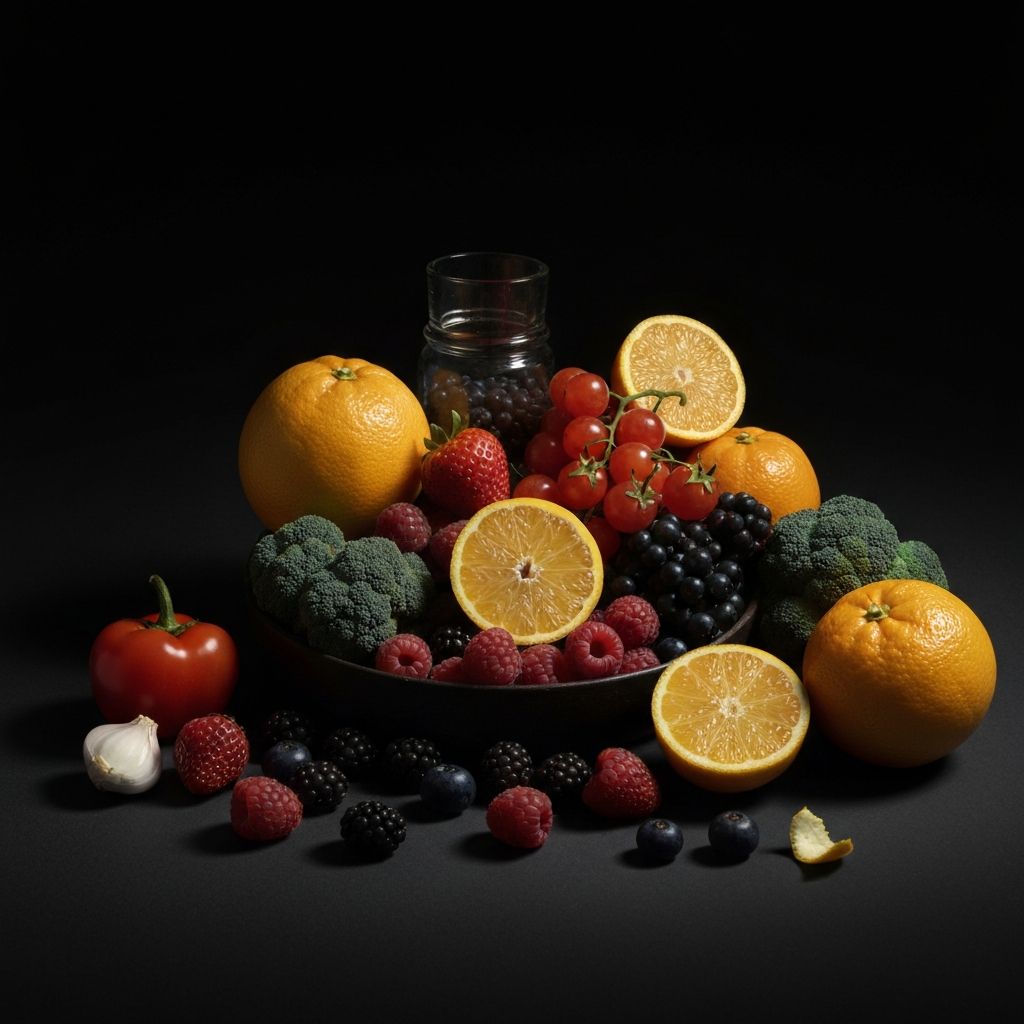
A water-soluble antioxidant found in citrus fruits, berries, bell peppers, and tomatoes. Supports collagen synthesis and immune function.
A fat-soluble antioxidant present in nuts, seeds, vegetable oils, and leafy greens. Protects cells from oxidative damage.
A plant compound converted to vitamin A in the body. Found in orange and red vegetables like carrots, sweet potatoes, and red peppers.
A large group of plant compounds with antioxidant properties. Present in berries, apples, grapes, tea, and chocolate.
Plant pigments with antioxidant functions. Found in colorful vegetables including spinach, kale, tomatoes, and squash.
A trace mineral with antioxidant properties. Present in Brazil nuts, seafood, whole grains, and legumes.
Plant-based foods naturally provide various vitamins, minerals, antioxidants, and fiber. Incorporating diverse plant foods—vegetables, fruits, whole grains, legumes, nuts, and seeds—ensures a variety of nutritional compounds supporting overall health.
Different colored plant foods contain different phytochemical profiles. Consuming a colorful variety of fruits and vegetables ensures exposure to diverse antioxidants and beneficial compounds.
While plant-based foods provide valuable nutrients, a balanced diet typically includes both plant and animal sources to ensure complete amino acid profiles and optimal nutrient intake.
⚠️ Disclaimer: This article provides educational information about antioxidants and plant-based nutrition. It is not intended to replace professional medical advice or nutritional counseling. Individual dietary needs vary based on age, activity level, health status, and personal circumstances. For guidance on specific dietary patterns, consult a healthcare professional or registered dietitian. Not a medicinal product. Consult a healthcare professional before use.
 Prylon